


The Department of Methods and Models for Economics, Territory and Finance – Sapienza University of Rome
MEMOTEF has as its mission the creation of an advanced scientific research context, both nationally and internationally, based on the integration of methods, tools and approaches aimed at multidisciplinary conceptual description and the analysis of economic phenomena, land management and to support decisions in the financial sector. It promotes and coordinates research activities on the following topics: probability theory and statistical modelling; mathematical models, statistical and computational economics, finance and insurance; methods for social research, population and policy analysis; methods for linguistic research, languages and foreign cultures; economic and spatial analysis; economic history and regional studies.
The Department of Social, Political and Cognitive Sciences – University of Siena
DISPOC is a research centre common to all scholars of social, political and cognitive sciences at the University of Siena who are interested in working in a multidisciplinary manner, while respecting the different disciplinary profiles. Reflecting this high degree of disciplinary and methodological pluralism is the fact that DISPOC brings together lecturers from 19 scientific-disciplinary sectors. The department is made up of around 60 lecturers, 16 administrative and technical staff, around 30 research fellows and around 2,000 students enrolled in Bachelor’s, Master’s and PhD courses. DISPOC has taken part, also as lead partner, in numerous national and international research projects. Users of such research often include local authorities and national and foreign public players.
Research Units
Sapienza University of Rome

Chiara Certomà: PhD in “Politics, Human Rights and Sustainability” at Sant’Anna School (Pisa), Assistant Professor in Political-Economic Geography, Research Fellow at the Institute for Advanced Studies on STS (Graz), at Ghent University and at Earth System Governance Research Network (Utrecht University).
Interested in innovative modes of urban governance and planning in the face of environmental challenges and the digital turn. Expertise on informal social planning, participatory research and citizen science. Research and teaching in high education institutions (The Open University, Milton Keynes; Universitè Paris 1 “La Sorbonne”; Rachel Carson Center for Environment and Society, Munich; Warsaw University of Life Sciences; University Paris Lodron Salzburg; BOKU University Wien; Waikato University). Personal web site: https://crowdusg.net/; Orcid: 0000-0002-7154-0915; Research ID Web of Science/Publon: D-1193-2014
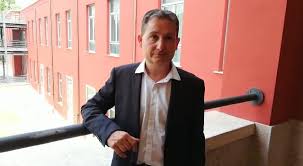
Massimo Battaglia: is an associate professor of Economics and Business Management at Sapienza University, where he teaches and conducts research in the field of management. His academic work focuses in particular on digital social innovation, corporate sustainability, corporate social responsibility (CSR) and corporate performance measurement systems. Throughout his career, he has explored how organisations integrate competitive strategies with environmental and social objectives, contributing to the scientific debate on corporate sustainability. He holds a PhD in management and has also studied and taught at other leading institutions, including Bocconi University, the Sant’Anna School of Advanced Studies, the University of Pisa and La Rochelle Business School.

Marcello Dato: is cultural curator at PLATOON Cultural Development, an international project founded in Berlin in the early 2000s that aims to connect creatives, artists and professionals in a global network to promote culture, art and innovation. He is the Cultural Director or Global Coordinator of the PLATOON network, which works to organise cultural spaces, exhibitions, events and creative hubs in cities such as Berlin, Seoul and Mexico City. His work focuses on the role of cultural innovation, the importance of culture as a transformative force and “global creative alliances” through multidisciplinary initiatives that include art, design, music, performance and social innovation.
University of Siena

Venere Stefania Sanna: is an associate professor of Geography at the Department of Social, Political and Cognitive Sciences (DISPOC) of the University of Siena. Venere participates and plays a leading role in numerous national and international projects. Her research interests include social innovation, social movements, sustainability issues, the sharing economy and collaborative economy, research methodologies in economic and social geography, and Citizen Science. Her research method is based on a strongly interdisciplinary approach, and her eclectic publication record reflects the diversity of her fields of knowledge and study. In addition to having participated in numerous national and international research projects, Venere possesses proven expertise on the issues of social and environmental sustainability of territorial development projects and participatory approaches (https://docenti.unisi.it/it/sanna)
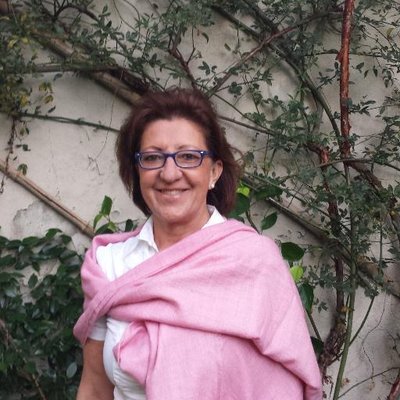
Cristina Capineri: is a full professor of Geography at the University of Siena where she has been teaching human and economic geography since 2000. She directs the Ladest Lab which promotes the development of spatial analysis methods and tools and combine them with mining and analysing spatial data, ranging from user-generated data (social media, location based apps, etc.) to traditional data sources (spatial databases, Census, surveys). Her research interests concern the themes of sustainability, local development, assessment and evaluation of sustainable development, geographical information systems (GIS ), volunteered geographic information. In recent times, her research has focused on digital platforms and citizen science.

Pouya Sepehr, a fellow researcher at the University of Siena’s Department of Social Political and Cognitive Sciences (DISPOC), focuses on the intersection of science, technology, environmental, and urban studies. Holding a PhD in STS from the University of Vienna, Pouya examines the societal impacts of technological advancements in relation to urban spaces. His academic roles have spanned from University Assistant to Research Fellow and Lecturer, specializing in digital social innovation and urban governance. Presently, he’s invested in multi-species urbanism to promote urban resilience and sustainability, blending theoretical insights with practice based experimentation for advancing urban sustainability futures.
Contact Us
For more information on DSICity project please contact the project coordinators: